How Creatives Can Release Facial Tension and Feel More Present in 5 Minutes a Day
 Ana with 1 N
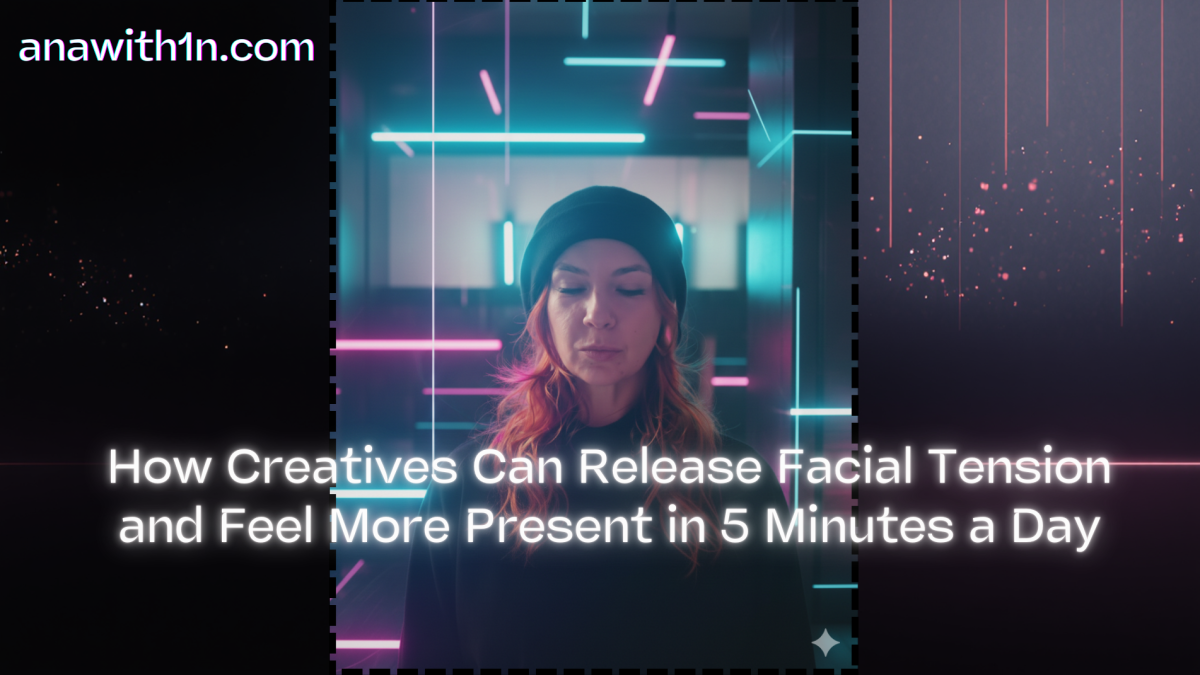
Face Dance and the Return to Creative Self-Expression
Facial Tension and Creative Presence in a World of Visibility
For many creatives, the face is not just a face. It is a place where emotion gathers, visible or not, where intention, fear, perfectionism, and longing meet before anything is spoken or shared. It becomes the frontline of creative presence, the space where artists prepare, often silently, to be seen, heard, and understood.
If you have ever felt your jaw stiffen just before speaking, your expression freeze in front of a camera, or your face go slightly numb when attention turns toward you, this is not vanity and it is not failure. It is the nervous system responding to visibility, a subtle readiness that lives in the body and shapes how we express ourselves.
Why Artists Hold Tension in the Face
Writers, performers, dancers, musicians, and sensitive thinkers live close to exposure. Even when not actively performing, the body often stays alert, as if observation could begin at any moment. Over time, facial muscles adapt to this constant readiness.
How the Nervous System Shapes Facial Expression
The jaw tightens, the mouth controls emotion, the eyes become watchful. Slowly, facial expression becomes something to manage rather than inhabit. This physical response is deeply connected to emotional memory, self-image, and the body’s need for safety in social environments.
Here lies the paradox of creative anxiety: the more we try to control the face, the less present we feel within it.
Facial Tension Is Not a Problem to Fix
When fear or perfectionism appears, the body prepares automatically. Often that preparation settles in the face as tightness, restraint, or disconnection from our reflection. This is not something broken.
It is intelligence.
It is protection.
It is the body responding to years of creative exposure.
Presence Is an Embodied Practice, Not a Mindset
Many artists attempt to relax through thought alone, telling themselves to be confident or calm. But presence does not return through mental control. Creative presence is physical. It lives in sensation, breath, movement, and rhythm.
This is where Face Dance begins.
What Is Face Dance and the Role of Music in Facial Release
Face Dance is not a beauty routine and not a technique to improve appearance. It is a facial movement practice guided by music and rhythm, designed to help creatives release tension, regulate the nervous system, and reconnect to authentic self-expression.
Music plays a central role in this process. Rhythm gives the body a sense of safety and flow, helping facial muscles soften naturally instead of being forced to relax. Sound becomes a bridge between emotion and movement, allowing expression to return gently and intuitively.
Why Music Helps the Nervous System Let Go
Slow, organic rhythms signal safety to the body. They support breath regulation, reduce hyper-alertness, and invite spontaneous movement. For creatives, music also reconnects the face to artistic instinct rather than control.
A 5-Minute Face Dance Practice with Music
You do not need an hour.
You do not need a mirror.
Five minutes of embodied movement with music is enough to shift creative presence.
Step 1: Release the Jaw to the Rhythm
Play a soft instrumental track with a slow, steady beat. As the music begins, soften the jaw and let the mouth open slightly as you exhale. Bring your fingertips to the jaw hinge and rest there gently, allowing the rhythm to guide your breath.
Step 2: Wake the Eyes with Flow
Blink slowly in time with the music, then gently widen the eyes as if noticing something new. Let the rhythm support softness and ease.
Step 3: Let the Face Move with the Sound
Allow the face to move freely to the music. Let expressions rise and fall naturally, without symmetry or performance. Think of the face as responding to sound rather than shaping appearance.
Step 4: Stillness in the Final Notes
As the music softens or ends, place your hands on your cheeks and pause. Feel warmth, weight, and breath. Notice what shifts, however small. This is presence returning through rhythm and sensation.
Face Dance and the Return to Creative Self-Expression
Face Dance is not about correcting your image. It is about releasing the parts of yourself that had to be controlled in order to feel acceptable in visible spaces.
This practice was born where identity, expression, and creative visibility meet, using movement and music as pathways back to the body. It is for artists who learned to slightly disappear to survive being seen, and who are now ready to return to their full presence.
If this resonates with you, you are already part of that return.
Want a personalised Face Dance routine and live guidance?
Book a Private 1:1 session here: https://www.anawith1n.com/cour...