The One Muscle That Holds Your Smile Hostage
 Ana with 1 N
Years of not smiling create real tension in the jaw and face. Here's what two years of face exercises changed, and where to start.
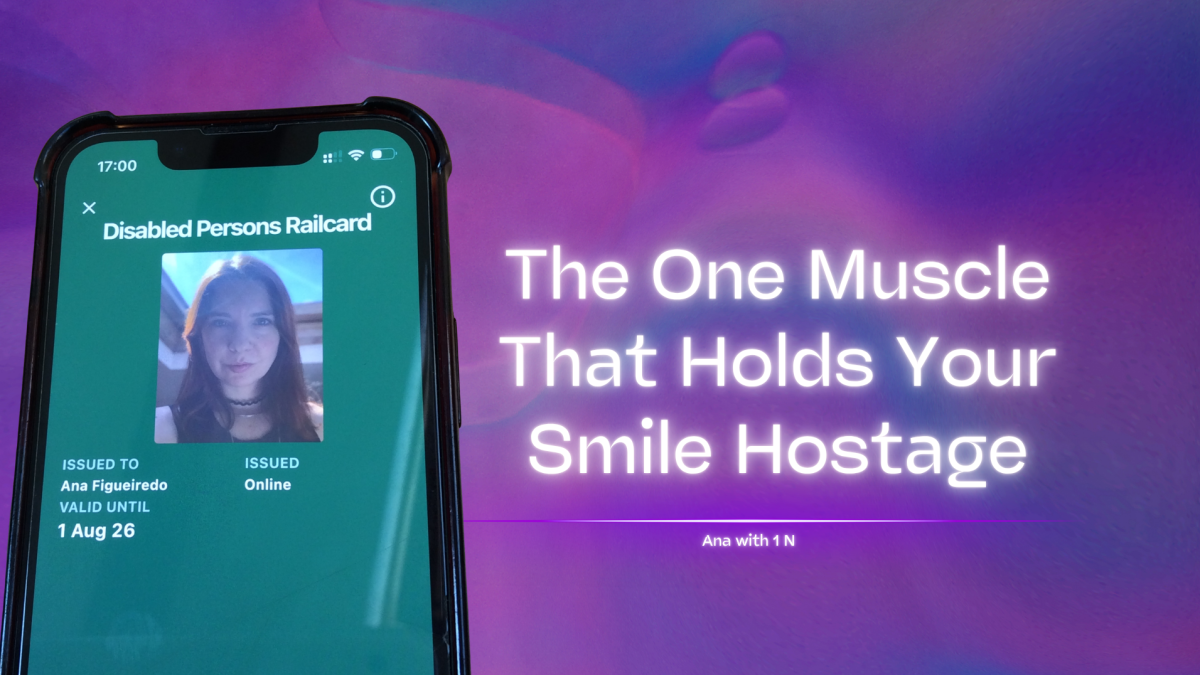
On the train to London, the ticket inspector asked for my railcard. I hadn't used the app in years - had to update it on the spot. And there it was: my face from three years ago, mouth pulled slightly to one side.
I hadn't noticed at the time. That was the thing.
When not smiling becomes a habit
For years I didn't smile. Not properly. I had braces, a tooth with a hole in it, the kind of things you keep hidden when you can. So you learn. You manage the face. You give people just enough, and nothing more.
The problem is that not smiling isn't neutral. The muscles don't rest - they hold. The masseter - the jaw muscle, one of the strongest in the body - braces against the expression that isn't coming. Over time, that holding becomes the default.
Chronic jaw tension builds slowly, invisibly. What looks like stillness in photos is actually effort.
What two years of face exercises changed
Two years ago I started working with facial movement exercises - jaw resistance, lip vibrations, relaxation work for the lower face.
The first thing I noticed wasn't in the mirror. It was in the morning. The jaw that used to feel locked by 9am started arriving at lunchtime instead, then not at all on good days. The holding was still there - but now I could feel when it was happening. That gap, between the tension starting and me noticing it, got smaller.
The asymmetry is still visible if you look. But the photo I'd take now would be different - not because the face changed that much, but because something underneath stopped bracing.
What I'm working on now
Recently I started working with both a physiotherapist and a speech therapist - both focused on the face. What's coming up is how much of the tension isn't just muscular. It's in the coordination, in the small compensations you build over years. Smiling without pulling the neck. Laughing without the shoulders getting involved.
I'm filming the exercises. That'll come soon.
How to start releasing jaw tension
The masseter responds well to direct, consistent work. These are the four I come back to most:
The grandma smile - a wide smile with no neck involvement. Harder than it sounds if you've been bracing for years. The neck wants to help. The point is to let the face do it alone.
Lip vibration - lips closed, air moving through them. Loosens the whole lower face. Thirty seconds is enough to feel the difference.
Lateral jaw resistance - palm against the side of the jaw, gentle pressure, the jaw pushing back. Done slowly, this wakes up the masseter without clenching it.
Laughing without compensating - a real laugh, but watching where the effort goes. If the neck tightens or the shoulders rise, that's the pattern. The exercise is just noticing it, then trying again.
None of these take long. The thing that makes them work is doing them every day, with something to listen to.
I still have the railcard photo. The mouth is still slightly off-centre. But now I know what it was doing.
If you want to understand what your face is holding, the diagnostic quiz is a good place to start - it takes 2 minutes and gives you a profile with specific suggestions. Take the quiz
Or if you'd rather work on it directly, book a 1:1 session - you'll leave with a routine built for you, on the day.
Get Your Free Guide: Glow Up Express ✨
Discover small daily steps that bring big results.
In this free guide, you’ll learn simple Face Dance rituals to reduce tension, tone your face, and boost your natural confidence — in just a few minutes a day.