What Is Face Dance?
 Ana with 1 N
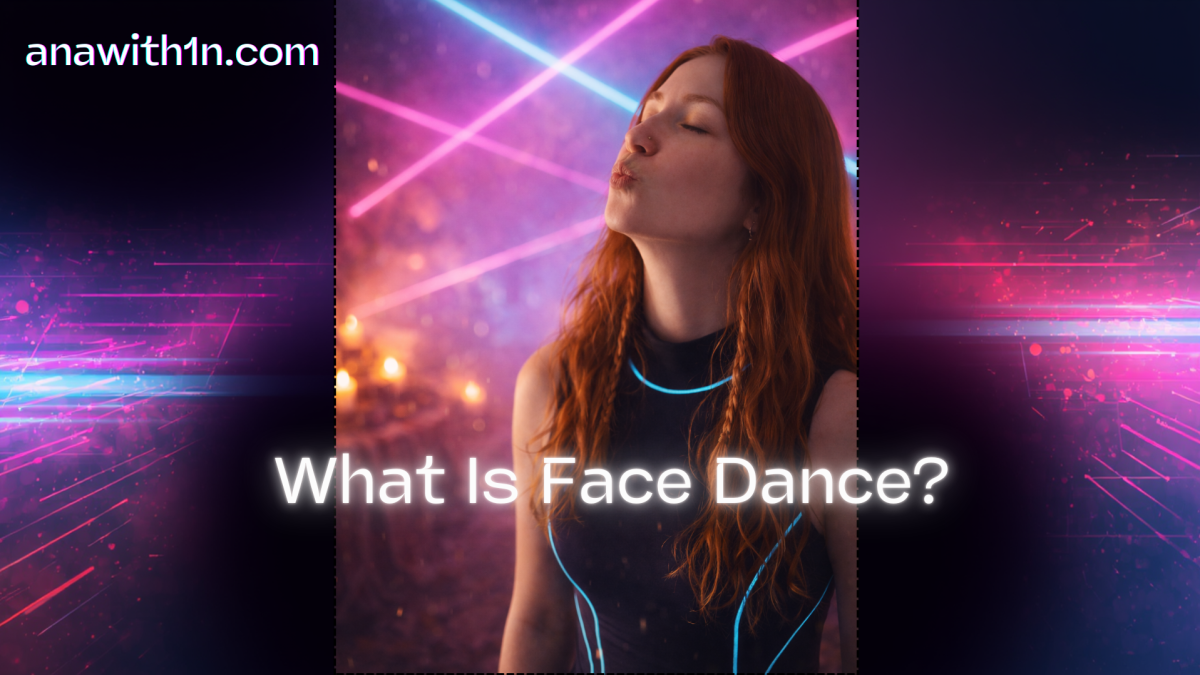
How Facial Movement, Music and Real Life Moments Gave Birth to an Artistic Practice
Face Dance didn’t start as a business idea or a structured method. It began quietly, one summer evening at home, surrounded by friends. At the time, I was studying face yoga and exploring facial tension release, and a friend casually asked me to show what I had been learning.
I began with the basics: simple movements to stimulate circulation, soften tension, bring awareness. Nothing formal, just something we were playing with. Music was playing in the background, and at some point, without meaning to, my face began moving with the rhythm.
Not like an exercise.
More like expression.
I stopped following the technique and started following sensation. My face stretched, shifted, reacted to sound, not to perform, but to feel. It moved in ways I hadn't planned. It danced.
My friend laughed and said, “You should invent facial dance.”
And strangely, it didn’t sound like a joke. It sounded like the beginning of something.
I had always respected face yoga, but the word “yoga” never fully felt like mine. I wanted something looser, more alive. I had been feeling the tension between what I was studying and what I was really drawn to - music, movement, emotional expression. I didn’t want a method that felt rigid or performative. I wanted something human.
That one comment planted the seed.
When Face Dance Left the Living Room and Entered the World
Not long after, I found myself dancing in a club on a warm summer night - loud music, open bodies, strangers mixing with friends. In the middle of it, without thinking, I let my face move to the rhythm, just like before.
A guy next to me noticed. He copied me.
Then laughed. Then got into it.
Soon, people around us were watching, joining in, making their own versions - playful, absurd, joyful. There was no awkwardness. Just release.
And then it happened again, on another night. Someone recognised me and, without saying a word, started mimicking those little facial movement, like a quiet inside joke. A signal.
That’s when I realised this wasn’t just personal. It touched something people didn't know they needed. It opened a space for connection, for laughter, for feeling.
Face Dance worked because it felt human.
Why Facial Movement Matters More Than We Think
Before all this, I had always treated the face as something to manage.
We hold tension in the jaw, in the brow, around the eyes, often without even noticing. We control expression to appear calm, competent, pleasant. The rest of the body gets to stretch, dance, breathe, but the face stays frozen, polite, restricted.
Through Face Dance, I started seeing the face differently, not as a surface to decorate or monitor, but as a space of memory, nervous system imprint, and stored emotion. And when that space begins to move, even slightly, something shifts: the body softens, breathing deepens, and the mind quiets down.
Facial movement isn’t about how you look.
It’s about how you feel.
It’s about release from everything you’ve been holding just beneath the skin.
From Spontaneous Expression to the Face Dance Method
Over time, what began as instinct became practice. I started shaping the experience into what is now becoming the Face Dance method - a blend of facial movement, somatic awareness, creative freedom and gentle release.
It’s not about performance or perfection. There’s no right or wrong. There is just music, movement, presence. The permission to feel, without needing to pose.
In the future, I’ll be creating guided Face Dance flows and original soundtracks to deepen the experience. But right now, Face Dance remains what it always was: an evolving practice, shaped by real life, real people, and the body’s need to speak without words.
And still, each session brings the same arc - laughter first, then release, and almost always a soft, grounding calm that arrives at the end, like the exhale you didn’t know you needed.
Face Dance as Artistic Self-Care, Not Performance
Face Dance doesn’t chase perfection, beauty trends or eternal youth.
Yes, softness and glow might come. But they are not the point.
The point is presence. Reconnection.
Letting go of what you’ve been holding in your expression for too long, and returning to the face as a place of movement, of truth, of life.
It became an artistic practice for me the moment I stopped managing my face and started letting it move, respond, feel. Even the smallest motion - a blink, a flicker, a twitch - can become a kind of dance when it’s honest.
In a world that teaches us to polish our appearance, moving your face naturally can be a quiet act of rebellion and of return.
Want to Experience Face Dance for Yourself?
If you’re curious about facial movement, nervous system release, or simply reconnecting with your face in a more creative, embodied way — here are two gentle ways to begin:
✨ Download the free “Glow Up Express” guide
A short and calming facial routine to release tension, wake up sleepy muscles, and bring presence back to your face in just a few minutes a day.
✨ Book a personalised 1:1 facial consultation
This is not a Face Dance session, but a private space to explore your facial tension patterns, your emotional habits, and build a custom routine that supports your daily expression and release.
Face Dance itself is evolving into a fuller creative method, with music and future guided flows on the way. But you don’t need to wait. These first steps are already an invitation into sensation, into presence, into your own face.
Categories: : MemoryinMotion
Get Your Free Guide: Glow Up Express ✨
Discover small daily steps that bring big results.
In this free guide, you’ll learn simple Face Dance rituals to reduce tension, tone your face, and boost your natural confidence — in just a few minutes a day.